
Installation of Sandwich Panels for Ceiling

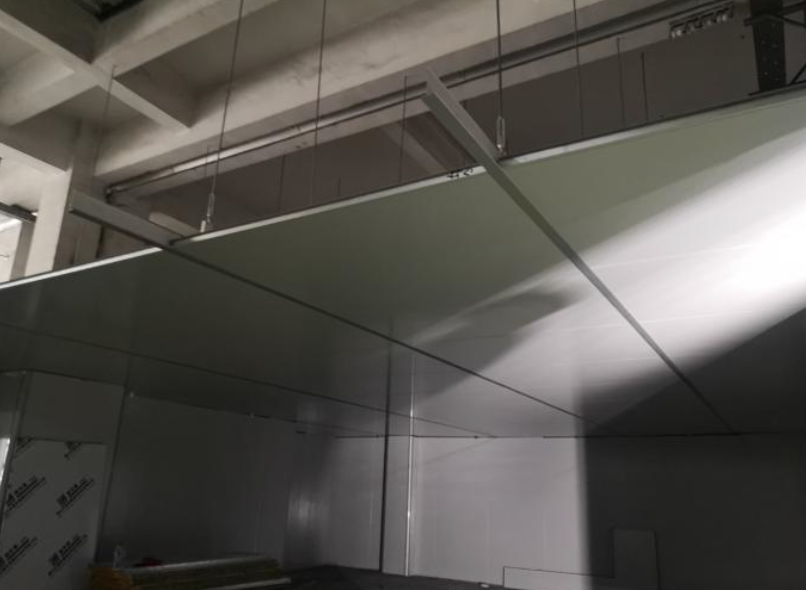
Sandwich panels for ceiling are primarily used in industries that require clean environments, such as healthcare, pharmaceuticals, aviation, and semiconductors. Depending on the production method, sandwich panels are classified as machine-made or hand-made, and the installation procedures for ceiling sandwich panels vary slightly depending on the method used.Today, I’ll walk you through the installation of a sandwich panel for ceiling,
Installation of machine-made sandwich panels for ceiling
Material of Sandwich Panels for Ceiling
Depending on the specific industry requirements, different materials are used. We will analyze this based on the structure of the sandwich panel itself
Surface material
- Color-coated steel sheet: The base material is galvanized steel sheet or aluminized zinc sheet, with a baked enamel coating on the surface. The type of coating determines the weather resistance: ordinary polyester (PE) and fluorocarbon (PVDF) are the most common.
- Stainless steel sheet: Primarily used in cleanrooms, made of 304# or 201# stainless steel, with a mirror or brushed finish. Specifically designed for ceilings in hospital operating rooms and electronics factory cleanrooms.
- Aluminum sheets: Their main advantages are their light weight and corrosion resistance. They are often used in applications with strict load-bearing requirements or in high-humidity environments, such as food processing plants and chemical plants.
Core material
There are three main types of core materials for ceiling sandwich panels: rock wool, polyurethane, and aluminum honeycomb.
- Rock wool The main features of rock wool sandwich panels are their high fire resistance and excellent sound absorption, but they are heavy and require larger furring strips. They are primarily used in locations with strict fire safety requirements.
- Polyurethane Polyurethane sandwich panels offer high thermal insulation and a smooth surface, and are commonly used in locations with strict moisture-proofing requirements, such as cold storage rooms; however, their fire resistance is not as good as that of rock wool.
- Aluminum honeycomb. Aluminum honeycomb core material is lightweight and highly structurally strong, and is commonly used in high-end cleanrooms, aerospace laboratories, and similar facilities.
Auxiliary materials
In addition to the main materials listed above, auxiliary materials are essential for installing sandwich panels for suspended ceilings.
- Keel The keel used for machine-made ceiling sandwich panels is mainly C-shaped aluminum and T-shaped aluminum, with a thickness generally not less than 1.5mm.
- Lead screw Lead screws, typically made of galvanized material with a diameter of at least 8 mm, are used to suspend sandwich panels.
- Screw connector Used in conjunction with a lead screw; its diameter matches that of the lead screw, and it is primarily used to connect to the lead screw.
- Hanging basket The hanging basket is made of galvanized material. The main adjustment is the length of the lead screw to ensure the ceiling panels are on the same plane.
- Sealant Generally, a specialized polyurethane sealant or weather-resistant silicone sealant is used.
- Fasteners: Use stainless steel self-tapping screws with a diameter of 3–4 mm.
- Aluminum Corner Connector Use equilateral aluminum angle stock with a side length of at least 25 mm and a thickness of at least 0.6 mm for finishing the edges of ceiling panels.
The above section covered the materials used in sandwich panels for suspended ceilings. In the next section, we will discuss the installation of machine-made sandwich panels for suspended ceilings.